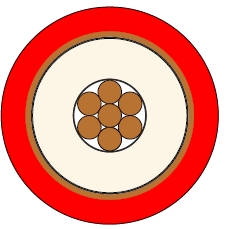
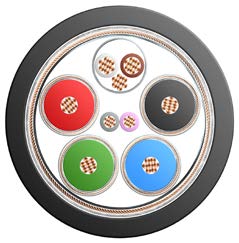
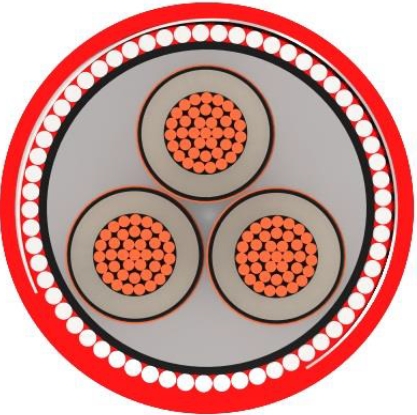
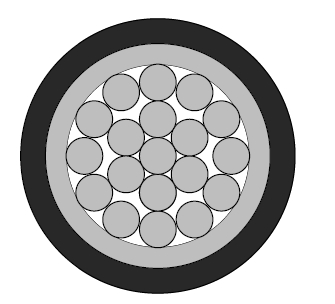
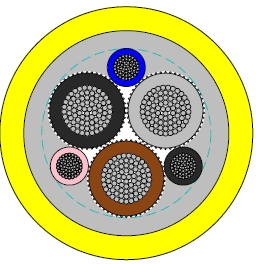
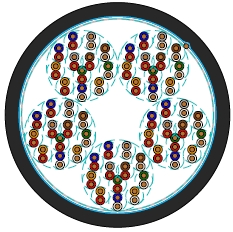
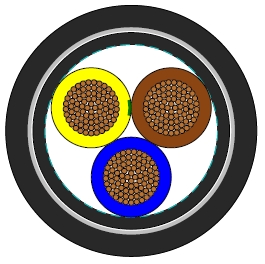
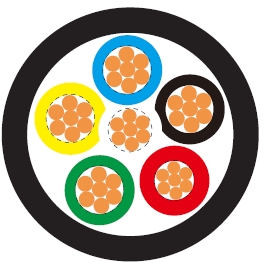
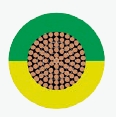
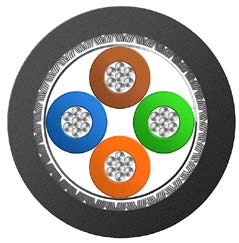
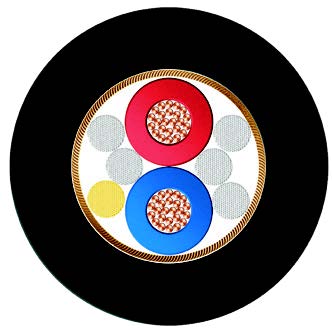
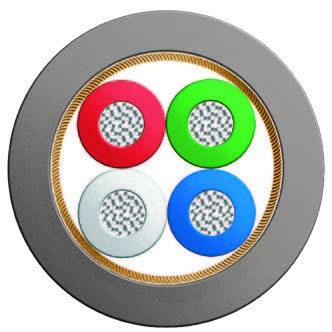
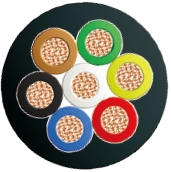
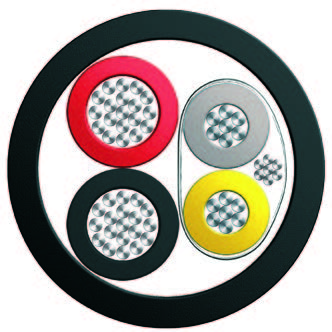
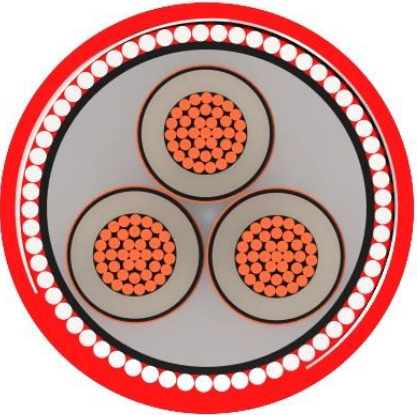
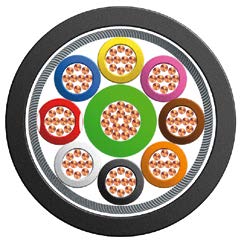
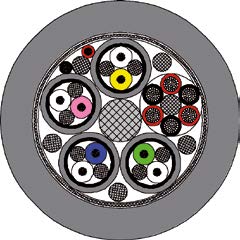
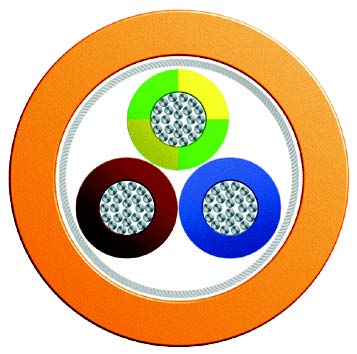
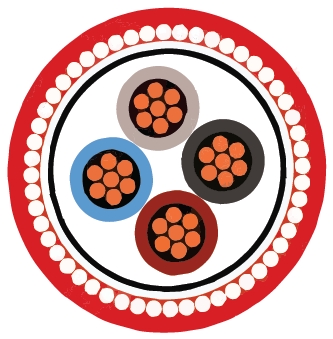
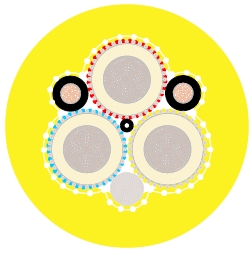
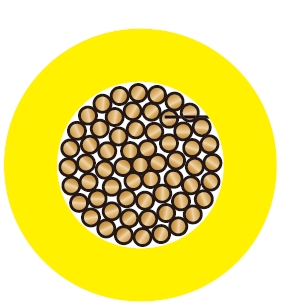
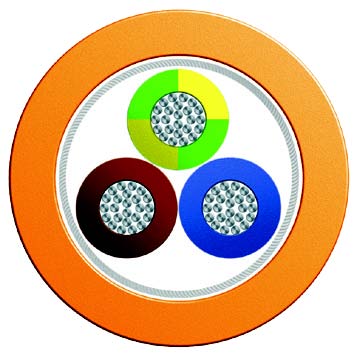
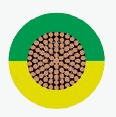
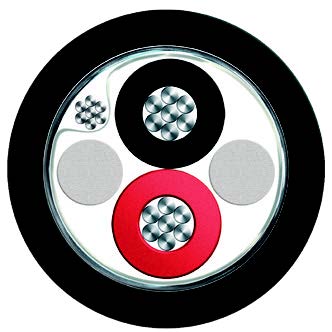
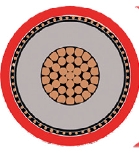
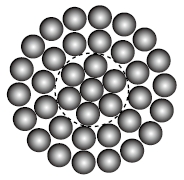
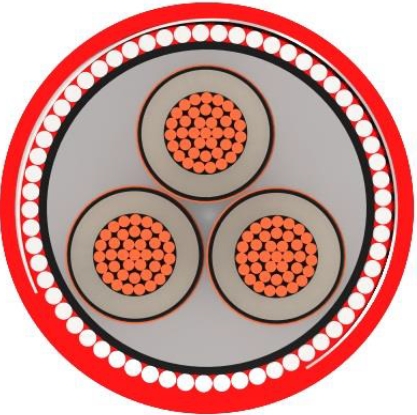
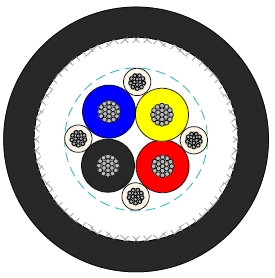
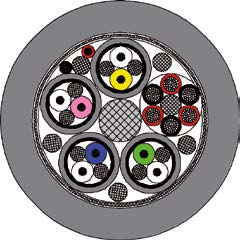
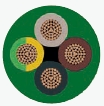
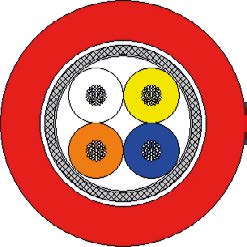
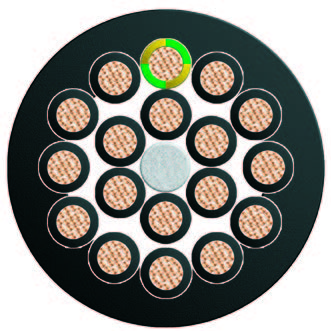
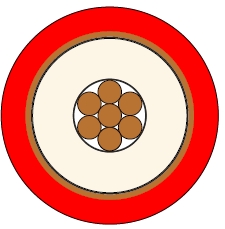
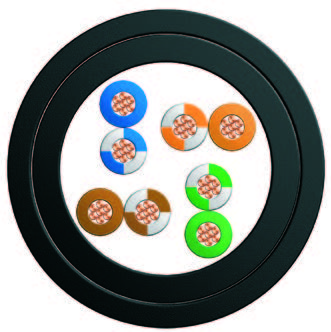
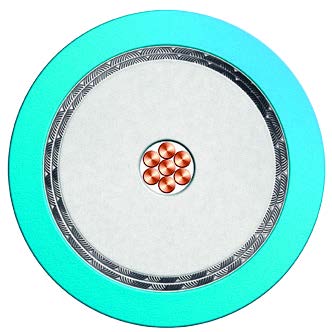
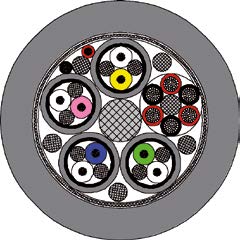
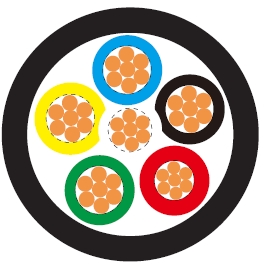
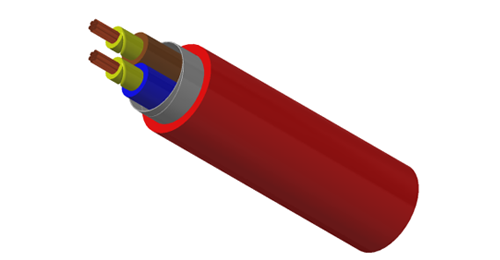
This heat-resistant PVC range provides flexible supply connections for indoor household appliances, lighting and light portable equipment. H05V2V2-F is the round construction and H05V2V2H2-F is the flat construction. Both use fine-stranded copper, TI3 PVC insulation and a TM3 PVC sheath, with a rated voltage of 300/500V and a maximum normal conductor temperature of 90°C.
CEI 20-20/12, CEI 20-35 (EN60332-1) / CEI 20-37 (EN50267), CENELEC HD 21.12 S1 /EN50265-2-1
Technical Characteristics
| Bare copper fine wire conductor |
| Stranded to DIN VDE 0295 cl. 5, IEC 60228 cl. 5 and HD 383 |
| PVC core insulation TI3 to VDE-0281 Part 1 |
| Green-yellow grounding (3 conductors and above) |
| Color coded to VDE-0293-308 |
| PVC outer jacket TM3 |
| Working voltage | 300/500 volts |
| Test voltage | 2000 volts |
| Flexing bending radius | 15 x O |
| Static bending radius | 4 x O |
| Flexing temperature | +5o C to +90o C |
| Static temperature | -40o C to +90o C |
| Short circuit temperature | +160o C |
| Flame retardant | IEC 60332.1 |
| Insulation resistance | 20 MΩ x km |
| AWG | No. of Cores x Nominal Cross Sectional Area | Nominal Thickness of Insulation | Nominal Thickness of Sheath | Nominal Overall Diameter | Nominal Copper Weight | Nominal Weight |
| # x mm^2 | mm | mm | mm | kg/km | kg/km | |
| H05V2V2-F | ||||||
| 18(24/32) | 2 x 0.75 | 0.6 | 0.8 | 6.2 | 14.4 | 54.2 |
| 18(24/32) | 3 x 0.75 | 0.6 | 0.8 | 6.6 | 21.6 | 65 |
| 18(24/32) | 4 x 0.75 | 0.6 | 0.8 | 7.1 | 29 | 77.7 |
| 18(24/32) | 5 x 0.75 | 0.6 | 0.9 | 8 | 36 | 97.3 |
| 17(32/32) | 2 x 1.00 | 0.6 | 0.8 | 6.4 | 19 | 60.5 |
| 17(32/32) | 3 x 1.00 | 0.6 | 0.8 | 6.8 | 29 | 73.1 |
| 17(32/32) | 4 x 1.00 | 0.6 | 0.9 | 7.6 | 38 | 93 |
| 17(32/32) | 5 x 1.00 | 0.6 | 0.9 | 8.3 | 48 | 111.7 |
| 16(30/30) | 2 x 1.50 | 0.7 | 0.8 | 7.4 | 29 | 82.3 |
| 16(30/30) | 3 x 1.50 | 0.7 | 0.9 | 8.1 | 43 | 104.4 |
| 16(30/30) | 4 x 1.50 | 0.7 | 1.0 | 9 | 58 | 131.7 |
| 16(30/30) | 5 x 1.50 | 0.7 | 1.1 | 10 | 72 | 163.1 |
| 14(50/30) | 2 x 2.50 | 0.8 | 1.0 | 9.2 | 48 | 129.1 |
| 14(50/30) | 3 x 2.50 | 0.8 | 1.1 | 10 | 72 | 163 |
| 14(50/30) | 4 x 2.50 | 0.8 | 1.1 | 10.9 | 96 | 199.6 |
| 14(50/30) | 5 x 2.50 | 0.8 | 1.2 | 12.4 | 120 | 245.4 |
| 12(56/28) | 3 x 4.00 | 0.8 | 1.2 | 11.3 | 115 | 224 |
| 12(56/28) | 4 x 4.00 | 0.8 | 1.2 | 12.5 | 154 | 295 |
| 12(56/28) | 5 x 4.00 | 0.8 | 1.4 | 13.7 | 192 | 361 |
| 10(84/28) | 3 x 6.00 | 0.8 | 1.1 | 13.1 | 181 | 328 |
| 10(84/28) | 4 x 6.00 | 0.8 | 1.3 | 13.9 | 230 | 490 |
| H05V2V2H2-F | ||||||
| 18(24/32) | 2 x 0.75 | 0.6 | 0.8 | 4.2 x 6.8 | 14.1 | 48 |
| 17(32/32) | 2 x 1.00 | 0.6 | 0.8 | 4.4 x 7.2 | 19 | 57 |
Class 5 bare copper conductors with heat-resistant PVC insulation and sheath.
Round and flat constructions are identified separately in the parameter table.
Core-count, area and dimension combinations support cord-entry and termination selection.
Choose the cable shape to suit the equipment entry and cord grip, then select conductor area and the protective conductor arrangement. Keep the route away from hot components and radiant heat. The 90°C figure is a conductor-temperature limit; it does not establish the permissible surrounding temperature for every load or installation.
H03V2V2-F / H03V2V2H2-F Heat Resistant Flexible Cable, 300/300V
H05RN-F Flexible Rubber Cable, 300/500V, EI4 Insulation and EM2 Sheath
What is the difference between the two designations?
H05V2V2-F is round; H05V2V2H2-F is flat. The table separates their dimensional data.
Which compounds provide the heat-resistant construction?
TI3 PVC is used for core insulation and TM3 PVC for the outer sheath.
Does 90°C describe the surrounding air temperature?
It is the maximum conductor temperature in normal use. Ambient conditions and load must be considered together.
Can this cable be routed against a heating element?
The application requires separation from hot parts and radiant heat, even with the heat-resistant PVC construction.
Which information helps select a cord grip?
Use the overall diameter for a round construction or both overall dimensions for a flat construction, together with the equipment’s retention requirements.